Electrical
There are Three Types Of Systems
Knob and Tube with Fuses 1900-1935
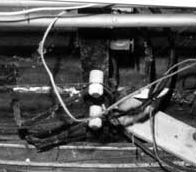
This type of electrical wiring was the very first type used at the dawn of the electrical age around 1900. The system is fraught with disintegrating insulation, loose splices with high resistance, high EMF (Electro Magnetic Field) and undersize wire to name a few problems.
Remedy: If you can't replace the entire system with modern Romex at least solder the splices in the attic or crawl space under the house.
Romex without Ground with Fuses or Circuit Breakers 1935-1950
Romex was an immediate improvement over the old knob and tube. As of 1997 it still seems to be holding together pretty well. It has one drawback in that it doesn't have a ground and puts humans and some appliances at risk of electrical shock.
Remedy: Sink a 9 foot ground rod into the soil near the electrical panel and connect the panel housing and outlets to it.
Romex with Ground with Circuit Breakers 1950-Present
Modern wiring, color coded, heat and chemical resistant, easy to splice and work with. Copper Romex is great, but the Aluminum Romex has been blamed for burning down houses.
Remedy: Avoid buying or renting houses with aluminum Romex and check junction boxes for burning or arcing if you live in one.
Common Electrical Problems
Circuit breakers keep tripping
This can be caused by either a defective breaker, defective appliance, direct short in the system or overloaded breaker.
Remedy: First try disconnecting all the appliances from the outlets serviced by the breaker. If the breaker stays on then start re-plugging each appliance into the wall until the breaker trips. If the breaker does not go on at all, disconnect the wire from the breaker that goes to the outlets and lights and try again. If it still doesn't go on you have a defective breaker and must replace it.
Fuse/Breaker Works But There Is No Power At Outlets Or Lights
First check to see if the neutral is working. If the neutral is good and the supply side of the breaker is hot and the connection good, open up all the junction boxes and check the splices.
Burning/Arcing Wires
This is usually caused by an oversized breaker/fuse of a loose wire splice, appliance connection or defective appliance.
Remedy: Check the breaker/fuse size against
the wire size, i.e.; 20 amp breaker/fuse goes with a 12 gauge wire. If
the appliance is hot or burned replace it. If the cord to the appliance
is hot the appliance is probably faulty.