|
The remarkable two volumes of
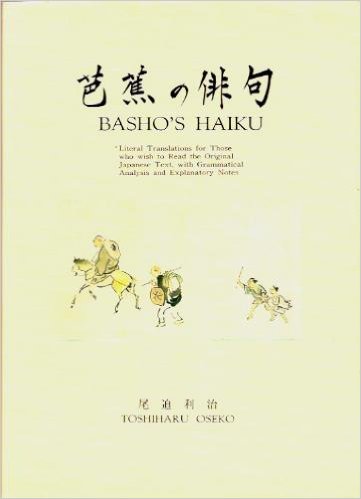
Basho's Haiku: Literal Translations for Those Who
Wish To Read the Original Japanese Text, with Grammatical Analysis
and Explanatory Notes
are translated and annotated by Toshiharu Oseko.
The first volume
of Oseko's translations appeared in 1990 and is available in the West.
The second (published 1996 in Tokyo: Maruzen) can be seen in some university libraries.
Blog entry.
|
|
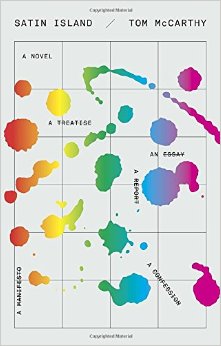
Satin Island (2015)
It's a novel - and also a treatise, an essay, a report, a confession, and a manifesto.
Satin Island's protagonist, U., works as an anthropologist for the Company.
The novel was
shortlisted for the 2015 Man Booker Prize and the 2015 Goldsmiths
Prize.
Blog entry.
|

|
The Art of Memoir (2015)
Page on:
Mary Karr's The Art of Memoir.
Blog entry.
|
|
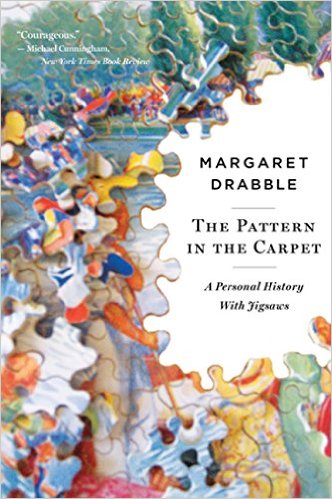
The Pattern in the Carpet (2009)
Page on:
Margaret Drabble's The Pattern in the Carpet.
Blog entry.
|
|
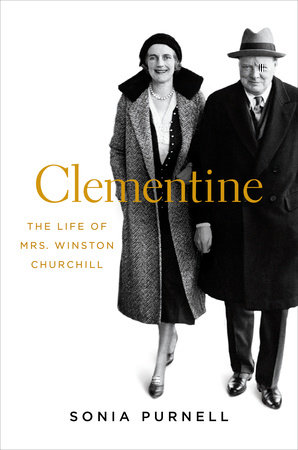
Clementine: the life of Mrs. Winston Churchill (2015),
a biography by Sonia Purnell.
Churchill's wife, Clementine, is given
"a deeply researched account that tells her life story".
The book documents Clementine's devotion to the brilliant but egocentric Churchill,
her ability to stand up to him in many ways, her initiatives for factory workers and soldiers
and medical care during World War Two, her perfectionism, her dislike of mothering her children but
joy in her grandchildren, and her preference for sleeping apart from and holidaying apart from
Churchill. She was not only exhausted by Churchill, especially after World War Two;
she became physically ill and mentally exhausted by him.
Blog entry.
|
|
Andy Goldsworthy: Ephemeral Works 2004-2014 (2015),
by Andy Goldsworthy.
Andy Goldsworthy's Andy Goldsworthy: Ephemeral Works 2004-2014 (2015),
a collection of Goldworthy's photos and photo sequences of many dozens of
his projects of a recent decade. He uses natural materials in transient
structures, which dissolve or fall or melt or blow away or in other ways
increase their entropy with poignant beauty.
His work is beautiful and his style is unique.
Blog entry.
|
|
Why Buildings Stand Up: The Strength of Architecture (1980),
by Mario Salvadori.
Clear, enthusiastic; beautifully illustrated to help all readers see the beauty and
value of architecture.
Blog entry.
|
|
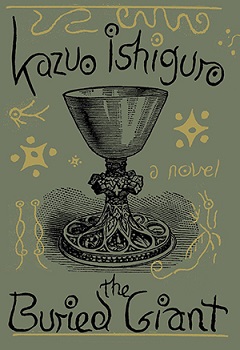
The Buried Giant: a novel (2015)
Its blurb includes:
|
Kazuo Ishiguro's first novel in a decade tells a luminous story
about the act of forgetting and the power of memory,
a resonant tale of love, vengeance, and war.
|
Superficially it's a post-Roman historical-fiction/fantasy story —
like Tolkien but better written.
More deeply it's about how we forget about wars and conflicts and troubles,
in order to carry on more peacefully; but how some of those memories just can't stay buried.
Blog entry.
|
|
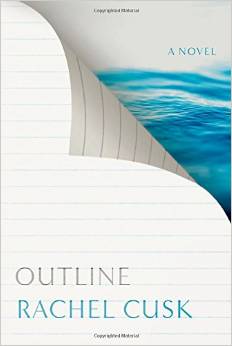
Outline: a Novel (2014)
by Rachel Cusk.
A brilliant presentation of how we become more clear about who we are
through our interactions with other people, often people we meet
transiently. It's a novel but she is also a memoirist and it feels like a
blend between the genres.
Blog entry.
|
|
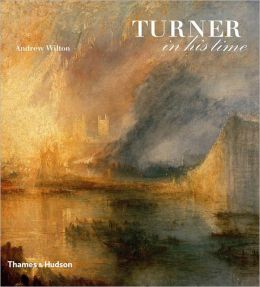
Turner in His Time (2007 revision of his 1987 original)
by Andrew Wilton.
A glorious 256-page text; includes
186 illustrations (164 in color).
The best biography of Turner that I have seen.
Brings alive his development as an artist and as a person.
Large format and commentaries do justice to his paintings and techniques.
Blog entry.
|

|
The Mill and The Cross (1996; trans. 2001)
by Michael Francis Gibson.
A beautiful book that teases apart the multiple parallel stories in the great painting by Peter Breugel.
In 2011, Lech Majewski released his film of the same name and based on Gibson's book.
Both book and film are totally glorious.
Blog entry.
|

|
The Girl on the Train (2015)
by Paula Hawkins.
A mystery story told from the points of view of three women,
each unreliable in their own way:
(1) Rachel, an alcoholic who commutes to London and back each weekday,
passing the house of her ex-husband Tom and his replacement wife Anna,
as well as the house of a neighboring couple (the wife turns out to be named Megan)
that Rachel fantasizes to have a happy
marriage;
(2) Megan; (3) Anna.
Much turns out to be not what you expect, with a satisfying ending that
is almost believable.
Blog entry.
|
|
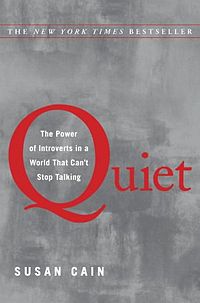
Quiet: The Power of Introverts in a World That Can't Stop Talking (2012)
by Susan Cain.
The book that extroverts and introverts can both benefit from reading.
See
notes on Quiet.
Blog entry.
|
|
|
The Mindful Way Through Depression: Freeing Yourself from Chronic Unhappiness
(2007)
by Mark Williams, John Teasdale, and Zindel Segal, with meditations guided by Jon Kabat-Zinn.
Explores remapping the neural net through tools of meditation and
"Mindfulness-Based Cognitive Therapy".
Blog entry.
|

|
Molesworth (2000 anthology of four books from the 1950's)
by Geoffrey Willan illustrated by Ronald Searle.
Please meet
nigel molesworth the curse of st custard's
which is the skool he is at
"as any fule kno"
Blog entry for Down With Skool! (1953).
Blog entry for How to Be Topp (1954).
Blog entry for Whizz for Atoms (1956).
Blog entry for Back in the Jug Agane (1959).
|

|
Things a Computer Scientist Rarely Talks About (2001)
by Donald E. Knuth.
The text of Knuth's six lectures on his process of studying the Bible:
Chapter 3, Verse 16, for each book of the Bible (where such a verse
exists — some books don't have three chapters).
Lots of notes and many pages of audience-Q & Knuth-A amplify each lecture.
As it's Knuth, there is So Much to appreciate in his straightforward
documentation of his sampling technique (akin to my method of deciding
whether or not to read a book) and his OC investigation, which he began
simply because he was invited to give a Bible Study Class.
It was wonderful to read a computer scientist's book again - must be a decade!
I feel slightly nostalgic for Searching and Sorting
and other computer books that I've dumped over the last decade.
Blog entry.
|
|
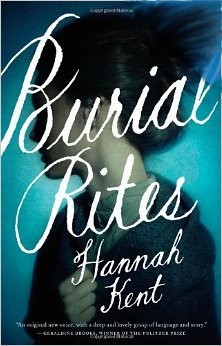
Burial Rites: a Novel (2013)
by Hannah Kent, her first novel, a historical fiction set in Iceland.
It's gripping and brilliant though I'm glad I don't live in that time (early nineteenth century)
or community (rural Iceland) with a woman accused of murder housed at my farm as a servant.
Her plot, characters, and writing are all powerful and memorable.
Her structure is especially excellent,
interleaving historical documents and events
with her invented scenes and actions and conversations.
I like her fluidity in changing the points of view, and through
her juxtaposing the inner thoughts (especially of Agnes) with her outer
expression in conversation and silences with Toti, Margret. I loved
the use of Nordic words I knew but had not heard since childhood - "Flitting
Days", etc.
But the icing on the cake for me was the visceral experience of weather
and the dwellings and the CONSTANT labors.
Blog entry.
|
|
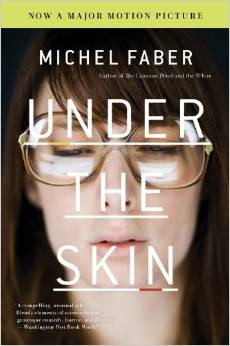
Under the Skin (2000).
by Michael Faber.
The book is an order of magnitude better than the 2014 movie
in all respects, especially in terms of arousing sympathy with an alien.
(The movie makes unfortunate and sweeping changes to the book's plot.)
Blog entry.
|
|
Nathan Filer's
Where the Moon Isn't (2013),
his first novel,
winner
(under the title used in Britain, The Shock of the Fall)
of the 2013 Costa (formerly Whitbread) Book Award for best first novel.
The novel's protagonist is Matthew Holmes, whose elder brother Simon had died a decade ealier
in an accident for which Matthew feels responsible:
|
Simon had hypotonia.
He also had microgenia, macroglossia, epicanthic folds,
an atrial septal defect, and a beautiful smiling face that looked like the moon.
[p. 31]
|
But Matthew develops schizophrenia, which includes voice
hallucinations that sound to him like Simon's.
And guilt that leads him, among other things, to build an apartment-sized ant farm.
He complains but not too much in terms of blaming his parents:
|
I guess there's a Use By date when it comes to blaming your parents for
how messed up you are.
[p. 275]
|
While he isn't cured he is ultimately helped by a woman who has:
|
known sadness, and it has made her kind.
[p. 279]
|
As a compulsive diarist, he concludes:
|
Writing about the past is a way of reliving it, a way of seeing it unfold all over again.
We place memories on pieces of paper to know they will always exist.
But this story has never been a keepsake — it's finding a way to let go.
[pp. 306-307]
|
Blog entry.
|
|
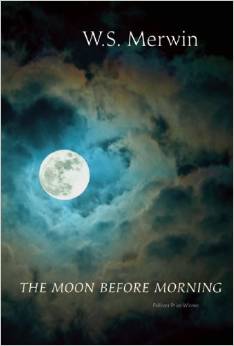
W.S. Merwin's
The Moon Before Morning (2014),
Luminous poems written in his 80's, of his life now and of his memories from his youth.
e.g. part of "Relics" on p.40:
Before I knew words for it
I loved what was obsolete
crumpled at the foot of a closet
lost in the street
left out in the rain
in its wet story
from another age
in a language that was lost
like the holes in socks
Blog entry.
|
|
Kate Atkinson's Life After Life
(2013)
Over and over the story returns to a snowy night in 1910, when Ursula Todd is born.
Ursula appears to be reincarnated as herself at that same moment
every time she dies. This remarkable novel lead us through the British
experience of the Great War in the early 20th century and the subsequent
Second World War.
Gradually we come to experience the
déjà vue that Ursula experiences.
Also we clearly see how the event of a moment can alter the course of a life,
which raises in the readers the memory of some of those points in their own lives.
And how, if one became increasingly conscious of each life being the same but different,
one might act differently.
Blog entry.
|
|
Ian McEwan's The Children Act: a Novel
(2014)
A year in the life of a British high court judge, as she struggles to cope with personal and public
problems.
A fairly human judge, in mid-to-top career and dealing (with some sense)
with a husband in mid-life crisis and (with some sense and some nonsense) with a 17-year-old
youth whose life is at risk due to his parents' beliefs as Jehovah's Witnesses.
Blog entry.
|
|
The Signal and the Noise
(2012)
Notes on Nate Silver's
The Signal and the Noise: Why So Many Predictions Fail —
But Some Don't,
Blog entry.
|
|
|
Barbara Kingsolver's
The Lacuna (2009).
This book tells the life of character Harrison Shepherd in Mexico and America
in the mid-twentieth century. It blends fiction and history and connects Shepherd to several
historical figures including Frieda Kahlo, Diego Rivera, and Leon Trotsky,
with eventual sorrows in the Red-baiting times in the USA as the Cold War escalates.
The interleaving of historical fact in news-clippings with fictional personal journals and letters
is handled with great skill.
Blog entry.
|
|
Yiyun Li's
The Vagrants (2014),
Very powerful story of life in a Chinese town in 1979.
Blog entry.
|
|
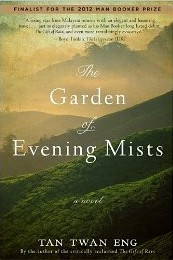
Tan Twan Eng's
The Garden of Evening Mists: a Novel (2012),
short-listed for the 2012 Booker Prize.
The book treats the culture of Japanese garden creation as a life-time
learning project, along the lines learning about the art and craft of
haiku, etc.
Set in Malaya during and after WWII, the book deals with Nakamura Aritomo, a Japanese master
gardener, adept at all aspects of Japanese gardening but especially the skills
of shakkei ("borrowed scenery"), where one makes use of
distant landscape, of the visible neighborhood, of the sky and clouds, and so on.
The narrator is an equally important person, Teoh Yun Ling, a young (in the War) Chinese-Malayan woman.
With her sister, she is harshly imprisoned by the Japanese during WWII.
Part of her mystery is how she came to survive the camp, and how everyone else there
came to be dead.
A historical fiction of clarity and perplexity, of claims to the truth
interleaved with self-protective deceit. Beautifully written.
Blog entry.
|

|
Alison Moore's
The Lighthouse (2012);
her first novel;
short-listed for the 2012 Booker Prize.
A recently separated man takes his car to Germany and embarks on a week-long circular hike in the Rhine Valley.
His fecklessness becomes increasingly apparent as the story progresses,
until he reaches the disastrous end of his journey.
One feels sympathy for his sadness yet irritation at his thoughtless carelessness
and erroneous assumptions.
The repetition and interleaving of images and the gradual unfolding of the man's loss of
his mother provide density and increasing insight.
Blog entry.
|
|
Anthony Marra's
A Constellation of Vital Phenomena (2013).
|
Anthony Marra's
A Constellation of Vital Phenomena (2013).
Set in Chechnia during the second Chechen War,
it tells of stories of half a dozen people and their
interactions of such bravery, loyalty, and courage in the midst of war and betrayal.
Five days in which a hunted girl
is protected by two doctors are interleaved the lives of others and with recent history.
Blog entry.
|
|
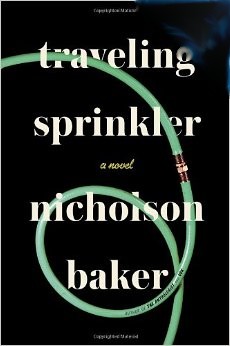
Nicholson Baker's
Traveling Sprinkler: a Novel (2013).
The good-hearted and laugh-out-loud obsessive protagonist is a delight.
Blog entry.
|
|
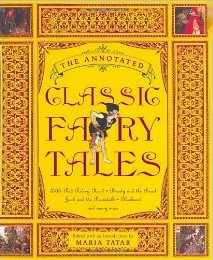
Maria Tatar's
The Annotated Classic Fairy Tales.
Buy Maria Tatar's The Annotated Classic Fairy Tales.
See also her
The Annotated Brothers Grimm.
Blog entry.
|
|
BUY:
Bring Me the Rhinoceros
|
Bring Me the Rhinoceros: And Other Zen Koans to Bring You Joy
by John Tarrant.
If zen koans never made sense to you, read this book. They may still not make analytical sense.
But they might make emotional sense. His introduction includes:
Koans ... encourage you to make an ally of the unpredictability of the mind
and to approach your life more as a work of art.
The surprise they offer is the one that art offers: inside unpredictability you will
find not chaos but beauty.
...
Koans show you that you can depend on creative moves.
...
Koans encourage doubt and curiosity.
...
Koans rely on uncertainty as a path to happiness.
...
Koans will undermine your reasons and your explanations.
...
Koans lead you to see life as funny rather than tragic.
...
Koans will change your idea of who you are, and this will require courage.
...
Koans uncover a hidden kindness in life.
[pp. 11-13]
|
|
|
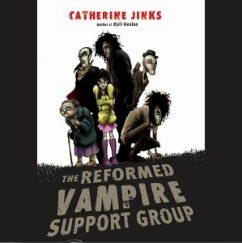
Catherine Jinks' The Reformed Vampire Support Group.
A vampire book with a difference, it's well-written and well-plotted,
with a terrific central character, the vampire Nina Harrison,
fanged in 1973 at age 15 and still living with her Mum over three decades later.
Clearly adored by the vampire Dave (ex-punk-band member), Nina falls in love with a werewolf
they rescue. With our heroines and heroes pursued by three people with evil intentions
and beset by lack of nourishment
(they fang only self-raised guinea pigs and not (usually) humans),
the book is a murder mystery and a how-will-they-escape-the-bad-guys romp.
Nina's snarky attitude is a great joy.
The only other vampire novels that create a similar-but-different level of delight are Christopher Moore's
terrific (thanks to Goth girl and Nosferatu-wanna-be Abby Normal):
Bite Me (2010)
Bloodsucking Fiends (1995)
And what a relief after other vampire novels, especially
the cliché, soppy "Twilight" series.
Blog entry.
|
|
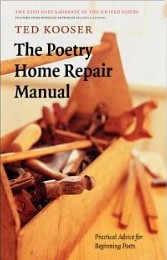
Winner of the Pulitzer Prize and two-term USA Poet Laureate,
Ted Kooser
offers this book of practical advice, ideas, and techniques.
Emphasizes that a poem is communication intended to be read by someone,
created by a succession of choices.
Blog entry.
|
|
Buy Diamond's 'Guns, Germs, and Steel' (2012)
|
A convincing presentation of data (especially from ethno-biology)
showing that worldwide differences in the power of races and their building of empires
are not due to their genetics but to the environment experiences of their ancestors.
Starting about 11,000 BCE,
domestication of both plants and animals began where the environment provided
appropriate plants and animals.
Although there were many in the middle east, over-farming and over-grazing
turned the region mainly into desert.
There were almost no such wild animals or plants in the Americas. And there were none
in Australia, where homo sapiens killed all the native large fauna almost immediately,
leaving none available for domestication.
People that began to domesticate animals tended to include them in their houses.
From that proximity, they received infections from the animals.
Those humans with resistance
to such infections were more likely to survive and have children.
This led to increasing resistance within farming communities to germs.
When people of farming heritage met/invaded non-farmers, who had not developed such resistance,
the non-farmers tended to be weakened and to a considerable extent killed by the diseases
to which the farmers had resistance.
Blog entry.
|
|
|
The Sisters Brothers (2011)
by Patrick deWitt.
A short-list nominee for the 2011 Booker Prize.
Starting in Oregon City in 1851, Eli Sisters describes his and his brother Charlie's rise and fall
as hired killers on the American west coast:
|
"You put a wage behind something, it gives the act a sort of respectability."
[p. 139]
|
With Eli's sedate (mother-taught)
language describing the brothers' daily and deceitful lives, interrupted by their brief and remorse-free violence,
the book has the feeling of a potential Cohen Brothers' movie (though someone else has bought the movie rights).
It's somewhat unreal, including some ridiculous chemistry with gold as well as scarily strong chemical
transported in wooden wine barrels ... but quite well written in terms of literary style and very entertaining.
And there is what passes for romance:
"I noticed a new woman in the far corner of the parlor ... her eyes ringed with worry or lack of sleep.
Despite her sickliness, she was a true beauty, with jade-colored eyes and golden hair running to the small
of her back. Emboldened with brandy and its attendant stupidity, I watched her alone until she could not
help but return my attentions, when she offered me a pitying smile.
I winked at her and her pity doubled.
...
The woman took a step toward me.
Was she leaning in for a kiss?
But no, she only had a secret to tell me."
[p. 127]
|
The Sisters Brothers' story (though not as witty as one by Shakespeare or Stoppard) is like a sociopathic version of
Rosencrantz and Guildenstern's
adventures, where two closely tied men get in a series of scrapes while being
background to a larger story ... though in the case of the Sisters Brothers,
the scrapes involve them beating up the weak and killing most of the men they meet.
Appalling as it would be if one met either of these characters in the flesh,
it's a riveting story while we wait for the well-deserved-and-very-ironic when-where-how that stops Charlie Sisters
from being the fastest gun around.
Brilliantly lively and deathly.
Book log for The Sisters Brothers.
|
|
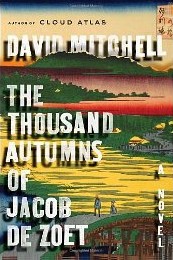
The Thousand Autumns of Jacob de Zoet (2010)
by David Mitchell.
A long-list nominee for the 2010 Booker Prize.
A rich story that starts in 1799 at a Dutch East Indies Company sea-trading outpost on an artificial island
in the harbor of Nagasaki. It continues there for two decades before a coda returns us to Europe.
The hero de Zoet is both wise and innocent, foolhardy and honest, observant and generous. A gentle survivor.
The book has strong characters living in a harsh time of illnesses, disfigurements, slavery, poisoning, and manipulation.
One learns much of the Europeans and much more of the Japanese of that time.
Women are mostly absent except for a young skillful Japanese midwife.
Mitchell's plot is slightly Dickensian in its use of coincidence, but otherwise it is strong.
His physical descriptions are invaluable, particularly the way he does not merely record a conversation but
records the parallel inner thoughts of a protagonist
as well as the parallel physical activities: a game of cards, a game of billiards, a game of go,
various dinner tables, gardening, holding steady on a sailing ship in a high sea, waiting for one's death.
Read it: prepare to be delighted and amazed.
Book log for The Thousand Autumns of Jacob de Zoet.
|
|
How to Paint the Finch's Song (2010)
by Carolyn Hall.
Her second collection of haiku.
Our 2011 full review at Modern Haiku
of How to Paint the Finch's Song.
Book log for How to Paint the Finch's Song.
|
|
|
Changing My Mind (2009)
by Zadie Smith.
A brilliant collection of essays on the cultural and the personal.
Book log for Changing My Mind.
|
|
|
The Amber Spyglass (2000)
by Philip Pullman.
Book 3 in this marvelous "His Dark Materials" parallel-universe story:
- The Golden Compass.
- The Subtle Knife.
- The Amber Spyglass,
one of the best books read in 2011.
The Amber Spyglass
not only won a Whitbread (now Costa) Prize for best children's book of the year but
was the first children's book to be named the Whitbread (now Costa) Book of the Year.
The core character is a child called Lyra and the core tool is a cryptic truth-telling tool called an
alethiometer; at the end of her childhood she loses her ability to read or decode its truth:
"why can't I read the alethiometer anymore?
Why can't I even do that?
That was the one thing I could do really well, and it's just not there anymore —
it just vanished as if it had never come ..."
"You read it by grace," said Xaphania, looking at her,
"and you can regain it by work."
"How long will that take?"
"A lifetime."
"That long ..."
"But your reading will be even better then, after a lifetime of thought and effort,
because it will come from conscious understanding.
Grace attained like that is deeper and fuller than grace that comes freely,
and furthermore, once you've gained it, it will never leave you."
|
The big theme of the book is the mysterious entity, Dust, and about freedom
from a fascist-like authority in heaven and earth:
"Tell me, then," said Will.
"Tell me about Metatron, and what this secret is.
Why did that angel call him Regent?
And what is the Authority? Is he God."
"He sat down, and the two angels, their forms clearer in the moonlight than he had ever seen them before,
sat with him"
Balthamos said quietly,
"The Authority, God, the Creator, the Lord, Yahweh, El, Adonai, the King, the Father,
the Almighty — those were all names he gave himself.
He was never the creator.
He was an angel like ourselves —
the first angel, true, the most powerful, but he was formed of Dust
as we are, and Dust is only a name for what happens when matter begins to understand itself.
Matter loves matter.
It seeks to know more about itself, and Dust is formed.
The first angels condensed out of Dust, and the Authority was the first of all.
He told those who after him that he had created them, but it was a lie.
One of those who came later was wiser than he was,
and she found out the truth so he banished her.
We serve her still.
And the Authority still reigns in the Kingdom, and Metratron is his Regent."
|
Book log for The Amber Spyglass.
|
|
|
The Poem's Heartbeat: a Manual of Prosody (1997)
by Alfred Corn.
The Poem's Heartbeat gives a well-organized introduction
to metrical composition in poetry. Has an appendix of sample scansions; also indexes cited
poets and poems.
As Richard Wilbur writes:
"The Poem's Heartbeat triumphs over the dryness — or
supposed dryness — of the subject, treating every aspect of it with precision,
dispatch, and apt illustration."
Book log for The Poem's Heartbeat.
|
|
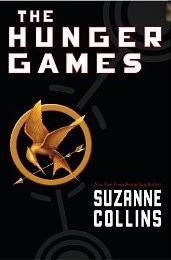
The Hunger Games (2008)
by Suzanne Collins.
Very powerful young-adult fiction set in a future dystopia where teenagers are living tributes
(as in Ancient Greece) forfeited by their tribes. In Collins' book, the tributes serve as
amusement to the powerful by attempting to survive in a to-the-death reality tv show,
the broadcast of the Hunger Games.
This book is marvelous summer reading, with twists and turns in plot every chapter. And nice big print.
Stayed up reading it late the first night and finished it in a few hours the next day.
But it's not merely a kid's action-romance book. A strong subtext concerns how far you will go
to help someone else and how far you will go to express gratitude. This is particularly important
when your decision will affect whether you live or die.
Book log for The Hunger Games.
|
|
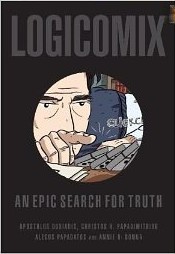
Logicomix: An Epic Search for Truth (2009)
by Apostolos Doxiadis.
At its core, this book explores whether
a rational person can find a right conclusion to a difficult moral problem
purely through logic.
The story is bracketed by Russell's 1939 lecture "The Role of Logic in Human Affairs".
Russell concludes, "maybe it's time to try another old triad:
Responsibility, Justice ... even a sense of Good vs. Evil,
i.e., all the concepts my Viennese friends considered
'beyond the dignity of serious words'.
In the end, says Russell, "there is no Royal Road to Truth. ... When Logic congeals into all-encompassing
and perfect-seeming theories, then it can actually become a very evil con trick". He quotes Wittgenstein:
|
All the facts of science are not enough to understand the world's meaning.
|
This 347-page manga is a novelized (mainly factual) version of philosopher
Bertrand Russell's search for truth and "to establish unshakable logical foundations of
mathematics".
The reader is introduced to the ideas challenging Russell (1872-1970) and other philosophers,
through discussions between Russell and the philosophers he met (including Gottlob Frege, David Hilbert,
Kurt Gödel, Alfred North Whitehead, and Ludwig Wittgenstein) and
discussions between Doxiadis and his creative team
(including formal-logic expert Christos H. Papadimitriou and artist Alecos Papdatos).
Includes Russell's Paradox (1901) which showed " an essential flaw in Cantor's set theory".
The Russell/Whitehead Principia Mathematica (1903)
attempted to create the foundations of mathematics built entirely on logic;
it is incomplete.
Helpful notes at the book's end (a) identifies the main inventions and gives the facts and
(b) summarizes biographies and ideas.
Book log for Logicomix.
|
|
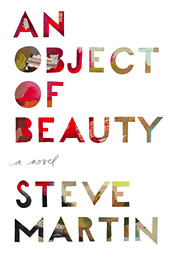
An Object of Beauty (2010)
by Steve Martin.
An evil delight. And after reading it, I really do look at art differently.
Apparently, like Lacey, my toes might have
"crossed ground from which it is difficult to return: ... started converting objects of beauty
into objects of value ... [understanding] that while a collector's courtship of a picture was
ostensibly romantic, at its root was raw lust".
The color reproductions of varied artworks relevant to the plot are more helpful than they are
gimmicky — almost 2 dozen, from Tissot's La Mondaine to Ruscha's LACM on Fire
[Martin is a former LACM trustee] to Tanning's Night Music
to Warhol's Flowers and Marilyn.
My favorite character is Pilot Mouse, a Banksy-like stunt artist
who manipulates collectors by spritzing his painting with attractive food (truffle) aromas.
Martin's heroine is the amoral Lacey: "The emotions of men, however, were of a different order.
They were pesky annoyances, small dust devils at her feet"
and
"It was apparent to everyone that Lacey was headed somewhere,
though her path often left blood in the water."
And there is the hint of redemption in the final pages where an art auctioneer writes a note:
"Dear Daniel, It was so lovely to finally read an essay about art that did not
mention money. Congratulations on a refreshing take on things."
Book log for An Object of Beauty.
|
|
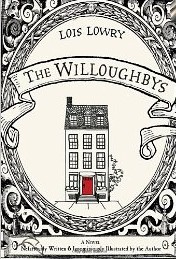
The Willoughbys (2008)
by Lois Lowry.
Delighful: a "tongue-in-cheek take on classic themes in children's literature, the four Willoughby children
set about to become 'deserving orphans' after their neglectful parents embark on a treacherous around-the-world
adventure, leaving them in the care of an odious nanny." [book blurb]
As Lemony Snicket (an author who should know) enthuses in his Publishers Weekly review:
|
Lois Lowry, who casts her
noble and enviable shadow wide across the landscape of children's literature,
from fantasy to realism, here turns her quick, sly gaze to parody, a word
which in this case means 'a short novel mocking the conventions of
old-fashioned children's books stuffed with orphans, nannies and long-lost
heirs.' These clichés are ripe if familiar targets, but Ms. Lowry knocks off
these barrel-dwelling fish with admirable aplomb in The Willoughbys, in which
two wicked parents cannot wait to rid themselves of their four precocious
children, and vice versa, and vice versa versa, and so on.
|
Book log for The Willoughbys.
|
|
All That Follows (2010)
|
All That Follows (2010)
by Jim Crace.
Wonderful presentation of a jazz musician's process ... and implicitly of the process of any improviser ...
you, me, Crace ... how we take what we know and fashion it into fire.
And as a presentation as a sofa-activist, it strikes a chord.
It might be both self-confession and wishful thinking by the author.
See also his
Gift of Stones,
a 2002 Best Book.
|
|
The Interrogative Mood: A Novel? (2009)
by Padgett Powell.
Not a novel — no plot and the length is more novella than novel —
this book is a fascinating romp.
Comprised of questions, this book is about most readers' favorite subject —
the reader herself, because at the end of this book you may not know more about the author than when you started
and you will certainly not have a plot to tell a friend,
but you will know more about yourself than when you started.
Like other readers, I read it with a smile on my face —
at least for about 90% of the time.
And I've already swiped a couple of its questions as quotations:
|
Have you ever set any part of yourself on fire?
Will you wear rain gear or do you prefer to just get wet?
|
|
|
The Anthologist (2009)
by Nicholson Baker.
|
The Anthologist (2009)
by Nicholson Baker.
Greater insight to the power of procrastination,
as escape, as Muse, and as way of life, than any other book I've read.
Recommended for any creative reader.
His main talking point (he has lots) is that in every poem
there's a pause at the end of each non-enjambed line: if you read
a poem like Baker, or at least like his mopey protagonist Chowder, you will pause at the end
of each line of poetry for the amount of time equivalent to a foot (be it iamb or trochee
or whatever); this effectively adds one foot to the line.
Hence, Baker/Chowder insists, pentameter is really a six-beat line.
Or, as he ultimately lectures, a three-beat line.
The point is not so much that Chowder is an out-of-work academic with lots of spare time
for inventing somewhat fringy points of view about poets, poems, and poetics.
The point is that Chowder is a creative procrastinator:
as such, the pause at the end of every line of a poem — which means just about every breath —
'has' to be honored as significant, just as Chowder honors his own breath-by-breath procrastinations.
And the other point being that Cowder is not that good when he tries to write a poem.
Whereas when he just observes, he has the core of one haiku after another
(despite Baker/Chowder's superiority to haiku):
I tried to write about how a tablecloth catches the ottoman of the air
as it settles down on a metal table.
And now I'm back outside again sitting in the white plastic chair
looking at the dew on the gas cap of my car.
A fly wants to bite me on the ankle.
The mosquitoes are all asleep.
They're just not out at this hour.
Only one biting fly.
And a mourning dove, who blows through his thumbs
to make that sound.
[p. 223]
|
Bitter-sweet at times; hilarious at times; worth reading and rereading.
Book log for The Anthologist.
|
|
Solar
by Ian McEwan.
|
Solar
by Ian McEwan.
Solar is a hilarious and dark satire on the greed of humanity,
embodied in the massive and deceptive Nobel Prize winner Michael Beard,
whose brief brilliance was recognized and feted,
who received (perhaps by accident) a Nobel Prize,
and who coasted thereafter on his appetites for wives, fame, fortune, food, and energy
— maybe the message is that it is people of such dubious ethics
(rather than the noble and dreamy tree huggers)
that might avert the worst side effects of man-induced climate change.
Or maybe their appetites will just make matters worse faster.
|
|
Lay Back the Darkness
by Edward Hirsch.
|
Lay Back the Darkness
by Edward Hirsch.
Includes two long poems ("The Desire Manuscript" and "The Hades Sonnets") that
explore stories from The Odyssey, The Aeneid, Metamorphoses, the Persephone legend, and the Orpheus legend.
The strengths of these ancient stories leads to poems that are less self-absorbed
than Hirsch's poems are in some of his other books, and the poems are the better for it.
His use of form (particularly sonnets) adds value to those poems.
Also contains the remarkable 15-page (10-part)
"Two Suitcases of Children's Drawings from Terezin, 1942-1944" poem,
which may well be Hirsch's greatest poem in its insight and generosity, and
its recognition of painful history experienced by the hurt and hopeful young of the WWII Nazi concentration camps.
|
|
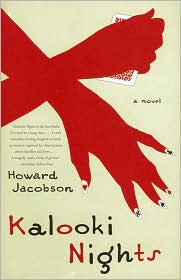
Kalooki Nights (2008)
by Howard Jacobson.
Essentially Jacobson's novel shows how desperate humor is used as a coping mechanism,
particularly for the impossible horrors of the Nazi-inflicted Holocaust
and for the difficulties of the close 1-to-1 relationships of cross-cultural marriages.
Set in Jewish families in north Manchester (Lancashire, UK) in the 1950s,
the book explores serious material:
"the Holocaust; fathers and sons; imbalanced friendships; evil and
victimhood; forgiving and forgetting; race and religion; Jews and Gentiles;
parenticide by gassing; and ... what it means
to be a Jew, Jew, Jew" [Will Buckley, The Observer, Sunday 9 July 2006].
A terrific book set in Lancashire (UK) and made even richer by Steven Crossley's authentic accents
[and much more authentic than in his relatively disastrous reading of
The Maiden Bride (2000)].
Its narrator, a would-be cartoonist, Max Glickman, was born in
"an irreligious Jewish family in the 40s, [and] he was raised in an atmosphere of sweet
reason comprising 'socialism, syndicalism, Bundism, trade unionism,
international brotherhoodism, atheism'" [Bryan Cheyette, The Guardian, 8 July 2006].
|
|
The Yokotos Officers Club (2001)
by Sarah Bird.
|
The Yokotos Officers Club (2001)
by Sarah Bird.
A stunning exploration of the American Japanese-occupation military and their families (from the
end of World War II to 1968) together with the lives of women in occupied Japan.
A strong warning of the horrors of the aftermath of war for the impoverished occupied.
Although this earlier book has a much more serious theme than that of Bird's later and excellent
How Perfect Is That (2008),
(a hilarious romp down the social ladder of Austin, Texas),
both books explore friendship and loyalty and revenge,
and both have strong women and some very funny dialog.
|
|
The Year of the Flood: A Novel (2009)
by Margaret Atwood.
Anyone interested in the Fate of The World
could be fascinated by Margaret Atwood's recent novel of 'speculative fiction' (her words).
This is a pre-quel to her Oryx and Crake and is more accessible
in that one sees the motivations and the developing story of the various groups.
By contrast,
Oryx and Crake,
a 2003 Best Book,
while also excellent,
is madder and more puzzling to read.
Both books end up in the same place, so either can be read first;
they are both about deceit, deception, and the desire to be God.
Remember:
|
Illness is a design fault... It could be corrected. [p.147]
|
When it becomes clearer that genetic engineering is toxifying:
|
The ratio of women to men fleeing the Corporations was roughly three to one.
Nuala said it was because women were more ethical,
Zeb said it was because they were more squeamish,
and Philo said it amounted to the same thing. [p.247].
|
While it solves nothing permanently, the fight of a commune of women and children
against some large testosterone-endowed ruffians is a joy. [p.254].
This book is rightly praised by many, including novelist Jeanette Winterson, who writes:
|
In this strangely lonely book, where neither love nor romance changes the narrative,
friendship of a real and lasting and risk-taking kind stands against the emotional
emptiness of the money/sex/power/consumer world of CorpSEcorps, and as the proper
antidote to the plague-mongering of Crake and Jimmy, for whom humankind holds so
little promise.
|
Winterson's favorite Atwood genetic invention is (as is mine):
|
the liobam — a cross between a lion
and a lamb, engineered by a lunatic fringe religious group that's tired of
waiting for the prophecy of the lion lying down with the lamb to come true. Their
own breed has curly golden hair and long, sharp canines, and will look at you very
gently while it rips your throat out — which is pretty much the metaphor for
the world of lethal paternalism created by CorpSEcorps.
|
Book log entry.
|
|
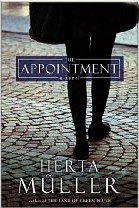
The Appointment (1997)
(German title Heute wär ich mir lieber nicht begegnet)
by Herta Müller,
our 2009 Nobel Laureate for Literature.
The book is beautifully written, a fascinating funny poetic dystopian mystery — kind of Kafka-meets-Wendy-Cope.
In the world of The Appointment,
people are prevented from (or in rare cases forced to) leave the country of Romania.
So the men escape into alcohol and the women in madness.
Government resources are lavished on monitoring, harassing, and interrogating the protagonist
(a factory-worker woman).
Apparently the Romanian powers
are looking for significant information that the protagonist might have.
The book ends: "The trick is to not go mad."
But it's up to the reader to decide if the protagonist has the trick,
or has dissolved the frontier between waking and dreaming.
In addition to the words chosen, the writing is a delight for its
richness of images and motifs, including:
transportation (tram, train, motorcycle),
fruit (plums, melons, walnuts),
white things and black things (birds, landscape),
containers (bags, cases, sacks),
water (rivers, wells).
Book log entry.
|
|
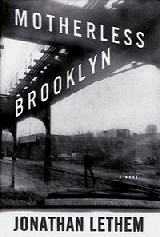
Motherless.Brooklyn (1999)
by Jonathan Lethem
A fast-paced detective novel told from the viewpoint of a smart young investigator
whose intelligence is masked by his exhibition of Turret's syndrome.
Exciting and hilarious.
Made even more fascinating by having just read Daniel Tammet's
Born on a Blue Day,
in which the power of compulsive behaviors of an autistic savant
find echoes in Lethem's protagonist.
Book log entry.
|
|
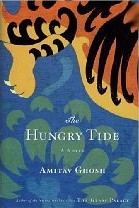
The Hungry Tide (2005)
by Amitav Ghosh.
Set in the islands and tideways of the Indian Sundarban archipelago and coastal barrier
in the Bay of Bengal, this novel is not just an adventure
but a meditation on poverty and conservation and mangrove forests. Has the most gripping
description of surviving (and not) a cyclone.
Book log entry.
|
|
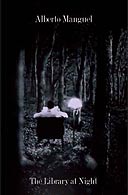
The Library at Night (2006)
by Alberto Manguel.
A hymn of adoration of libraries from the tiniest to the largest, from the past to the future.
Manguel (as he showed in
Homer's "The Iliad" and "The Odyssey": A Biography)
is a master-craftsman in collecting and organizing data.
Here, with a 13-page double-column index and 367 footnotes,
he praises libraries.
Outside theology and fantastic literature, few can doubt that the main features of our universe are its dearth of meaning
and lack of discernible purpose. And yet, with bewildering optimism, we continue to assemble whatever scraps of information
we can gather in scrolls and books and computer chips, on shelf after library shelf, whether material, virtual or otherwise,
pathetically intent on lending the world a semblance of sense and order, while knowing perfectly well that,
however much we'd like to believe the contrary, our pursuits are sadly doomed to failure.
Why then do we do it? Though I knew from the start that the question would most likely remain unanswered,
the quest seemed worthwhile for its own sake. This book is the story of that quest.
[p.3]
|
His books "in my study, the chosen books that I consider more immediate ...These feel like
extensions of myself" [p.177] include:
Pocket Oxford Dictionary
2-volume Shorter Oxford
Robert
Pequeño Larousse Ilustrado
Roget's Thesaurus
"in the 1962 version before unholy hands revised and mangled it"
Killy's Literatur Lexicon
Graves' Greek Myths "in the Penguin edition"
|
Book log entry.
|
|
|
From A to X: A Story in Letters (2008)
by John Berger,
a long-list nominee for the 2008 Booker Prize.
Poetic writing by A, telling (explicitly and implicitly) her political-prisoner beloved how goes the revolution.
Much is present in the silences and spaces.
A succinct review from Arundhati Roy says:
|
This is a book of controlled rage sculpted with tools
of tenderness and a searing political vision. Everything he writes about is profound, precise and
invoiced: Liberty and the lack of it, hope and the lack of it, power and the lack of it, love and
the terrible yearning that takes its place when the loved one has been taken away.
|
Book log entry.
|
|
The First Word: The Search for the Origins of Language (2007)
by Christine Kenneally.
Book log entry.
|
|
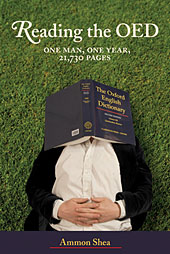
Reading the OED: One Man, One Year, 21,730 Pages
by Ammon Shea.
Another of the best books read in 2009.
Everyone knows that the OED stands for the
"Oxford English Dictionary", of size as in Shea's subtitle.
It is also 20 thick volumes, with 59 million words.
Book log entry.
|
|
|
Man in the Dark (2008)
by Paul Auster.
Fascinating multi-layered tale of people coping with horrendous grief,
ways that they console themselves, and the possible parallel universe in which the actions of
George W. Bush
led to the secession of many American states and to the second civil war in the USA.
There are many worlds and they all run parallel to one another,
worlds and anti-worlds, and each world is dreamed or imagined or written by someone in another world.
Each world is the creation of a mind.
... the war was in one man's head, and if that man was eliminated, the war would stop.
|
Different from but reminiscent (in its clarity and surrealism) of a
best book read in 2004:
The Body Artist
by Don DeLillo.
Auster's motifs (which he recycles with different success in many of his novels):
- Author: used as a prop or character.
- Embedded story: the protagonist is an author, inventing other stories by writing them or dreaming them
or thinking them out.
- Sex: hints of incest.
- Toilet: a man sits on the toilet and defecates.
- White: man dressed entirely in white.
Book log entry.
|
|
|
No Country For Old Men
by Cormac McCarthy.
A thriller that meditates on loyalty, love, and the collapse of society.
|
|
|
If Not, Winter,
the Sappho translations (with an essay) by Anne Carson.
|
|
| The Spoken Word Treasury: 100 Modern American Poets Reading Their
Poems, Volume III .
The poets read their own poems; each poet's reading is prefaced by a commentary on their life and work.
Book log of THE SPOKEN WORD TREASURY: 100 MODERN AMERICAN POETS READING THEIR
POEMS, VOLUME III.
|
|
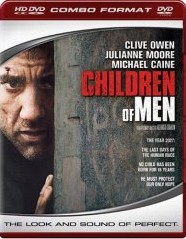
The Children of Men
by P. D. James.
Amazing book, in the tradition of Orwell's 1984
and Waugh's
When the Kissing had to Stop.
Interesting to compare
the book The Children of Men
with the movie Children of Men.
Book log of The Children of Men.
|
|
|
Run (2007) by Ann Patchett.
The book (except for the first and last chapters) takes place over a 24-hour period.
The father (a [white] former mayor of Boston)
of a old Boston family wants his kids to be in politics or doctors.
His two youngest sons are adopted black children.
One of them is nearly hit by a car when an unknown woman charges to push
him out of the way, saving his life.
Who would do such a thing? ... Read the book,
not just for the plot but for the characters and their interactions.
|
|
| Sula (1973)
by Toni Morrison.
Sula
is beautifully written: a stunning story of the struggle of African Americans in rural Ohio
during the first half of the twentieth century,
and how their community thrives on creating scapegoats.
In 1993 Morrison was awarded the Nobel Prize in Literature, the first black woman to win it.
Morrison does not identify her works as feminist. She has stated:
"I don't subscribe to patriarchy, and I don't think
it should be substituted with matriarchy. I think it's a question of
equitable access, and opening doors to all sorts of things."
Book log of Sula.
|
|
The Pesthouse (2007)
by Jim Crace.
Remarkable novel about a dystopia in a future world where North America loses its population and its nationwide organization.
What is of rare and great value, however, is loyalty and love.
Book log of The Pesthouse.
|
|
Autobiography of Red: a Novel in Verse (1998)
by Anne Carson.
Brilliant.
Striking movement of a legend into the modern world.
Other writers have compared
Anne Carson
favorably to
Louise Glück.
Carson
has a more interesting voice, in this book, compared with anything by
Glück.
Book log of Autobiography of Red: a Novel in Verse.
|
|
The Brief History of the Dead
| The Brief History of the Dead (2006)
by Kevin Brockmeier.
Web log of The Brief History of the Dead.
|
|
The Almost Moon
| The Almost Moon (2007) by Alice Sebold.
Web log of The Almost Moon.
|
|
Arcadia
|
Arcadia (1992)
by Jim Crace.
Wonderful.
Read it.
|
|
A Year of Living Your Yoga (2006)
by Judith Hanson Lasater.
A book of daily aphorism, spoken by Judith Hanson Lasater over thirty years of Yoga classes
and jotted down by her faithful student and scribe Kathy Vasquez.
Lasater adds a suggestion of how to put each aphorism into practice.
Light-handed, unpreachy, and delightful.
Book log of A Year of Living Your Yoga.
|
|
blink: The Power of Thinking Without Thinking (2005)
by Malcolm Gladwell.
Terrific book. Very readable.
Insightful about practical social psychology and cognitive psychology.
Biopsychology,
Cognitive Psychology,
and
Personality Psychology.
Includes one of the best impressions for a non-autist
for how a person with autism experiences situations with people.
Book log of blink.
|
|
Making Comics: Storytelling Secrets of Comics, Manga, and Graphic Novels
by Scott McCloud.
A great introduction (with lots of exercises and notes) to
creating the images and words of comics.
Includes many frames drawn by (and credited to) other comics authors.
Book log of
Making Comics:
Storytelling Secrets of Comics, Manga, and Graphic Novels.
|
|
The Niagara River
|
The Niagara River (2005)
by Kay Ryan.
Great. Maybe her best yet. Keeps her at the top of my list of
best poets that I read and reread.
Web log of The Niagara River.
|
| Lullaby (2002)
by Chuck Palahniuk.
The core question that the book asks is: what would you do if you discovered an ancient 'culling'
lullaby poem that, after being incanted to someone that you want to die, causes that person to die
painlessly and without a mark -- SIDS for everyone, as it were.
It seems that anyone can
behave like a criminal.
The story jumps between the narrated past and the flash-back past and the 'now' of the narrator
and his sweetie (he hopes) on a literal witch hunt.
More at web log of Lullaby.
|
|
East of Eden
by John Steinbeck.
In the nine months of 1951,
when John Steinbeck was writing East of Eden,
he warmed up for the day by writing in his
Journal of a Novel,
to help him warm up before he began the writing for the day.
It is fascinating to see how
Journal of a Novel
records his clarity of story and intention.
And very creepy to see how wicked characters of the story develop.
More at web log of East of Eden.
|
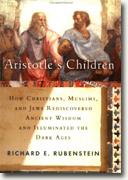
| Aristotle's Children: How Christians, Muslims, and Jews Rediscovered Ancient
Wisdom and Illuminated the Dark Ages (2003)
by Richard E. Rubenstein.
A delightful fast-paced chronicle of the
influence of Aristotle (384-322 BCE), the fourth-century-BCE philosopher,
on major Western religions (Christianity, Judaism, and Islam),
and the enthusiasms, obsessions, insights, and wars among Christian followers and
opposers of Aristotle's teachings.
Aristotle created a new system of philosophy that focused on the material world,
whose operations he explained by a series of causes.
In the second and third centuries C.E.,
Western Christian scholars suppressed Aristotle's teachings,
which seemed to challenge their doctrines of faith and God's supernatural power.
By the seventh century,
Muslims discover Aristotle's writings and his rationalist philosophy and principles of logic.
In the mid-twelfth century, Europe scholars translated Aristotle's great works from Arabic into Latin,
particularly Aristotle's De Anima [On the Soul].
The religious establishment reeled under the re-covered new concepts of the natural world and the soul of man.
More at web log of Aristotle's Children.
|
|
| The Lovely Bones, an amazing first novel by Alice Sebold.
Anyone involved in grieving and mourning for the dead and the dying
might find this a consoling book,
especially when listening to the calm and sensitive reading on CD by Alyssa Bresnaban.
An added benefit of the CD is an interview with Alice Sebold.
Web log of The Lovely Bones.
|
|
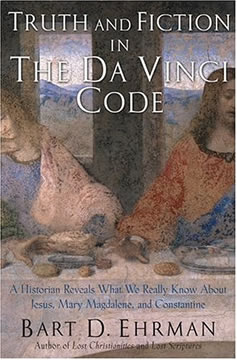
Truth and Fiction in the Da Vinci Code:
A historian reveals what we really know about Jesus, Mary Magdalene, and Constantine
(2004)
by Bart D. Ehrman.
See our review.
Web log of Truth and Fiction in the Da Vinci Code.
|
|
Feet of Clay (1996)
by Terry Pratchett.
A hilarious murder mystery in a parallel universe.
Explores issues of freedom and trust.
Centers on
Sam Vimes,
Captain Carrot,
Angua,
Cheri,
and
Dorfl.
The Patrician
Vetinari puts in a death-defying act.
More favorites from the many
reviewed books by Terry Pratchett:
Web log of Feet of Clay.
|
|
Gilgamesh (a new English version)
translated by Stephen Mitchell.
Brilliant.
The world's oldest epic (from 1700 BCE) tells of Gilgamesh, psychopath, two-thirds god,
and king of Uruk (today's Iraq), his
criminal behavior
against his own people, his brotherhood with the wildman Enkidu,
his preemptive attacks, and his journey to the underworld of
death.
Web log of Gilgamesh.
|

| The Power of Negative Thinking:
Using Defensive Pessimism to Harness Anxiety and Perform at your Peak (2001)
by Julie Norem.
Compare with Seligman's
Learned Optimism (Seligman).
Page devoted to
The Power of Negative Thinking by Julie Norem.
Web log of The Power of Negative Thinking.
|
|
Mind Wide Open: Your Brain and the Neuroscience of Everyday Life
( 2004) 2004)
by Steven Johnson.
Great! One of the Best of 2004.
"Using a mix of experiential reportage, personal
story telling, and fresh scientific discovery, Steven Johnson describes
how the brain works, its chemicals, structures, and subroutines."
|

|
Homage to Catalonia (1938)
by George Orwell.
A riveting book, and one of the few to clarify the mysterious Spanish Civil War.
In 1936, Eric Blair (the novelist, critic, and political satirist who used the pseudonym George Orwell)
went to Spain to write about the Spanish Civil War, and to enlist in
a Socialist Republican militia.
During 1936 and 1937, he fought in support of the Republican government,
against the attempted take-over by Franco's Fascists in the Spanish Civil War.
But Franco and his fellow-Fascists defeated the legally elected socialist Republican government of Spain.
Orwell has said:
"Every line of serious work that I have written since 1936 has been written,
directly or indirectly against totalitarianism and for democratic Socialism as I understand it."
See our review.
|

|
Number 10 (2003)
by Sue Townsend.
More than a farce, Number 10 is an epic journey around Britain in the Tony Blair years.
See our web log review.
|

|
Walking to Martha's Vineyard (2003)
by
Franz Wright.
This book is a blessing of amazing poems - poems that met Emily Dickinson's test, for they
take off the top of my head.
Many of Franz Wright's poems begin in the physical of what is happening just here and just now,
and they leap through space and time, and between the outside world and the heart's interior.
See our web log review.
|

|
The Master (2004)
by Colm Toíbín.
A historical novel that probes the fictional mind and passions of author Henry James much
as he once probed the fictional minds and passions of his relatives and friends.
A worthy short-listed nominee for the 2004 Booker Prize.
See our web log review.
|
|
The Body Artist
by Don DeLillo.
See our web log review.
|

|
Nine Horses (2003)
by Billy Collins.
See our web log review.
|

|
An Instance of the Fingerpost (1998)
by Iain Pears.
A murder mystery set in the year 1663, in Oxford, England, during the Restoration
and its hydra head of political intrigue.
Written in 4 different voices, by 4 men each with different social rank, political allegiance,
and personal agenda, and each with his own link to the mystic Sarah.
|

|
Borderliners (1994)
by Peter Høeg.
An unusual and fascinating book about an attempt to integrate
children with mental illness into a "normal" school (Biehl's Academy),
and how the school fails them, and how the children try to help and heal each other.
The "borderliners" are children that don't fit in to "normal"
categories of children, such as for having psychological difficulties.
The "borderline" children intermix with "normal" and
privileged children,
and struggle to understand who they are and what is happening.
A surreal and haunting story.
|
|
Eats, Shoots & Leaves: The Zero Tolerance
[or should that be 'Zero-Tolerance' with a hyphen]
Approach to Punctuation
(2003)
by Lynne Truss.
A hilarious and readable (5 sunny hours) book on punctuation.
See our web log review.
|
|
The Creative Habit: Learn it and Use it for Life by Twyla Tharp.
This, the best book I read in 2003,
inspires the reader to move into the creative zone and do the work
essential to being any kind of professional artist.
Twyla Tharp (the leading and innovative choreographer) is a brilliant mentor and a no-nonsense delight.
Brendan McCarthy, in her marvelous review in Ballet Magazine, writes:
[Twyla Tharp] is a Puritan, has great certainties and is impatient of ambiguity
("I don't like grey. That is how I am.").
... The core of her argument is in the book's title:
that creativity is less a matter of genius than of disciplined work habits.
Her rituals
... matter; not merely because they shape her day,
but because they are a source of strength when creativity is barren and inspiration comes slow.
Read the book. Do the exercises. Do your art. And
check our review.
|

|
Life of Pi
by Yann Martel.
A tale of a sea voyage, survival, a tiger
(even though I don't believe the tiger existed), animal training, and
hope laced with terrified vigilance
and the intelligence of the spirit.
|

|
Poetry Speaks
edited by Elise Paschen and Rebekah Presson Mosby; CD advisory editors Robert Pinsky,
Rita Dove, and Dana Gioia.
Best collection of poetry read this year. A book with 3 audio CDs.
Hear the voices of 42 poets
reading their own work. Curious on what you might have heard at a reading by the Victorian,
Alfred, Lord Tennyson? Or T.S. Eliot, Ezra Pound, Robert Frost, William Butler Yeats, Gertrude Stein,
Robert Browning, or Ogden Nash? Hear these and more.
The book, organized chronologically by date of birth of each poet,
shows for each a picture of a poet, notes on the poet's life, and
a critical essay by a modern poet or essayist.
Handwritten notes by the poet and several of their poems
complete each section.
|

|
Interpreter of Maladies
by Jhumpa Lahiri.
This collection of 9 stories won Jhumper Lahiri a well-deserved Pulitzer Prize.
The prose is strong and delicate, like a sword with filigree on its handle.
The endings of many of these stories are sad or poignant, and yet just and "true" in the way
Hemingway meant that word when he said, "Write something true."
These stories are set among families immigrating from
India to Europe or North America.
The humanity of Jhumpa Lahiri characters, and their struggles,
have a background of customs of food, dress, and veneration of families
in or from India.
Our empathy with the characters lets that background become more familiar.
Her tales of immigrants abroad and outcasts at home
reminds us of our own possibilities to be immigrant or outcast.
|

|
One Hundred Poems from the Japanese
by Kenneth Rexroth (Translator)
Classical Japanese poetry, selected and translated by Kenneth Rexroth.
Mostly from Manyoshu (A.D. 759) and Kokinshu (A.D. 905)
collections of poems.
Most of his selections are 5-line "short poems" or
tanka
(though Rexroth writes them as quatrains), such as:
     The mists rise over
     The still pools at Asuka.
     Memory does not
     Pass away so easily.
with a sampling of Naga Uta (long poems) and
haiku, such as:
     The long, long river
     A single line
     On the snowy plain.
|
|
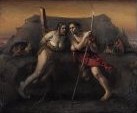
Odd Nerdrum: Paintings, Sketches, and Drawings
text by Richard Vine, art by Odd Nerdrum.
Scandinavian artist and rebel Nerdrum (believed now moved from Norway to Iceland for tax benefits)
is unique in rendering the figure in the manner of the Old Masters
while drawing mythical and often startling images.
The pictures are even more grand and entrancing in reality (because of their size)
than can be conveyed by this magnificent book.
|

|
Oryx and Crake
by Margaret Atwood (2003).
Think bioengineering is a good and well-controlled area? Read this engrossing book and think again.
More comments in our quarterly book log.
|

|
Harry Potter and the Order of the Phoenix (Book 5) by J.K. Rowling.
This latest and longest volume is a fascinating and enthralling book.
The spells fly, the Quidditch players fly, and your heart flies when you read it!
Reviews of the Potter books, the DVDs, the magic.
|

|
The Four Pillars of Investing : Lessons for Building a Winning Portfolio
by William Bernstein.
Bernstein identifies four pillars: (1) theory of risk and returns;
(2) history of the madness of markets;
(3) psychology of the masses;
(4) business (including how stockbrokers make their money off clients).
Then he explains how to construct an investment portfolio that will let you
sleep at night.
John Bogle selected this book as the best investment book for 2002.
Check our review.
|

|
In An Uncertain World
by Robert E. Rubin (2003).
|

|
The Intelligent Asset Allocator: How to Build Your Portfolio to Maximize Returns and Minimize Risk
by William J. Bernstein.
|

|
The Great Unraveling: Losing Our Way in the New Century
by Paul Krugman
Check our review.
|

|
Shackleton's Boat Journey
by Frank Arthur Worsley, Edmund Hillary (Introduction)
A startling story of the courage, skills, determination, and luck experienced by Shackleton, Worsley,
and the rest of the crew of The Endurance, on their 2-year escape from Antarctica during
World War Two.
|

|
Girl With a Pearl Earring
by Tracy Chevalier.
An elegant and quietly bewitching novel. It explores the life of 17th-century Dutch painter Johannes Vermeer,
his painting tools and methods, and how he interacted with a new servant that he brought to his house,
Griet, an artistic and observant 16-year-old girl.
|

|
Oscar and Lucinda
by Peter Carey.
A compelling romantic tragedy of the obsession of Oscar and Lucinda for gambling,
and their resulting struggles with themselves and their lives.
A Booker Prize winner, set in 19th century England and Australia.
|

|
Half Asleep in Frog Pajamas, by
Tom Robbins.
Another romp through the weirder side of life,
wherein Tom Robbins entertains with a capitalism-meets-anarchism love story in Seattle.
Robbins creates some of the most original metaphors being written today;
almost every page of this book is more inventive and interesting than 99.9% of the poems published today.
|

|
Carnival Evening: New and Selected Poems 1968-1998
by Linda Pastan.
Poetry by Maryland's ex-poet laureate, full of deep feelings, shadows,
and beauty. Learn from her subject matters
as well as from her inner music and line breaks.
Delicate poems of life and truth.
|
|
The Gift of Stones
by Jim Crace.
This unusual story occurs at an ancient and pivotal time when a tribe moved from
the Stone culture to the Bronze culture.
The upheavals and fears in their harsh world
tell of the attractions and terrors of embracing the new and unknown.
Crace
is a supple writer, inventing a fluid and plausible story much as those of the one-armed man
in his novel.
Poetically, much of the book is iambic.
|

|
Spies
by Michael Frayn.
A cautionary tale of deception, curiosity, cruelty, and the dangers of spying on each other,
especially when the spies are children.
Set in rural England during the Second World War.
|

|
The Constant Gardener (2001)
by John Le Carré.
British diplomat Justin Quayle becomes a spy to solve
the murder of his young and desirable firebrand of a wife, Tessa.
A drama of moral outrage surrounding scandal of world pharmaceutical
manufacturers and their financial and murderously unethical dealings in Africa.
For a special treat, check out the cassette-tape version, read by Le Carre himself.
|

|
Selkirk's Island
by Diana Souhami.
A biography of the mariner Alexander Selkirk, marooned on the uninhabited island
of Juan Fernandez, where he thrived alone till his rescue in 1709.
How he survived is fascinating.
Almost as astonishing is the terrorism that went under the guise of privateering,
as part of the British-Spanish conflicts at that time.
Winner of 2001 Whitbread Biography Award.
[Selkirk was the sailor behind Daniel Defoe's novel
Robinson Crusoe.]
|

|
Atonement
by Ian McEwan.
A novel that is a crime story, a war story, and a love story,
with McEwan again exploring the challenges of unrelenting love.
As Alan Stewart of Amazon.co.uk writes, "at heart, Atonement is about the pleasures, pains,
and dangers of writing, and ... about the challenge of controlling what readers make
of your writing. ... thoughtful, provocative ..."
It is a special treat to hear the cassette-tape version.
|
|
|
Books on Learning Spanish.
|
I'm learning Spanish - check out some of the resources that I find helpful.
|